When Sam Nussbaum was diagnosed with pancreatic cancer in his 70s, it was no surprise to his family that he chose WashU Medicine for his care. After all, Nussbaum had spent a significant portion of his distinguished career as a physician-scientist and health-care executive at the medical school and BJC HealthCare. And during that time, his family forged a deep connection to WashU.
But the choice did not come out of loyalty. Nussbaum wanted the very latest in cancer care, and he conducted an international search to find it. The pursuit led him to Kian-Huat Lim, MD, PhD, a professor of medicine in the Division of Oncology at WashU Medicine and a medical oncologist at Siteman Cancer Center at Barnes-Jewish Hospital and WashU Medicine. Beyond his clinical skill, Lim is nationally recognized for his innovative and promising bench-to-bedside pancreatic cancer research.
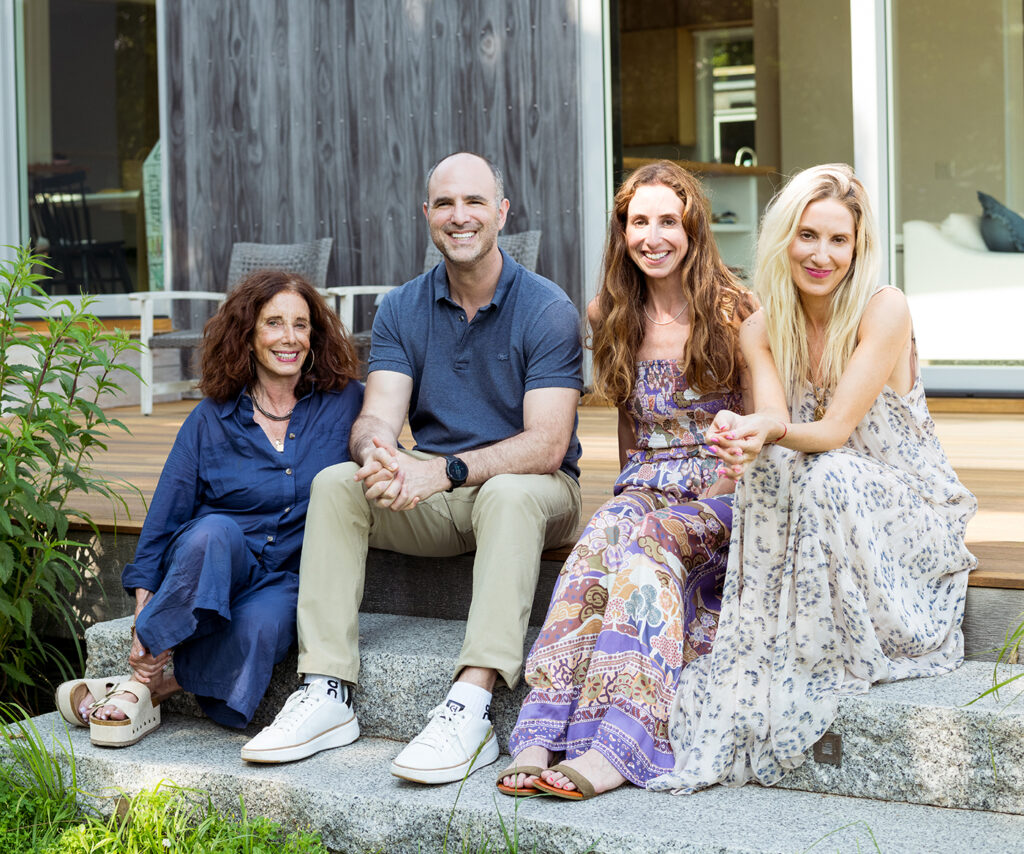
Within months of beginning treatment, Nussbaum and his family — wife, Rhoda; daughters Barrie Kahn Levine and Cara Kahn, AB ’02; and son, Jeffrey — saw the promise of Lim’s science. They decided to support his mission to find effective solutions for this notoriously difficult-to-treat cancer. Although they knew that Sam faced a bleak prognosis, they hoped their support would benefit future patients and their families.
The Nussbaums made their first gift to advance Lim’s work in May 2021, contributing $300,000 in spendable funding to establish the Samuel R. Nussbaum, MD Fund for Innovative Pancreatic Cancer Research within the John T. Milliken Department of Medicine’s Division of Oncology. In November 2024, roughly three years after Sam’s death, they pledged an additional $480,000 to the fund. Their gift fuels WashU’s efforts to promote healthier lives through With You: The WashU Campaign.
“Sam knew that gastrointestinal cancers are significantly on the rise, and he recognized that Dr. Lim is a brilliant scientist,” Rhoda Nussbaum says. “We are fortunate to be able to give back, and we feel strongly that Sam would have wanted us to help other families in this way.”
Their support has enabled Lim to identify several methods used by tumor cells to evade cancer treatment. He has translated those findings into potential new therapies that are currently being tested in multiple national clinical trials. “The Nussbaum Fund has been critical in moving my research forward,” Lim says. “I’m eternally grateful for their support.”
Coming full circle
Barrie Kahn Levine describes her father as a brilliant, well-loved, family-oriented Renaissance man who was passionate about history, architecture, art, gardening, and, of course, biomedicine. Sam Nussbaum began his career at Harvard University, where he spent two decades as a leading endocrinology clinician and researcher. In 1996, he was recruited to St. Louis to serve as executive vice president of medical affairs and system integration at BJC HealthCare. “It was a big deal to move from the East Coast to the middle of the country,” Barrie says. “But our family fell in love with St. Louis and WashU.”
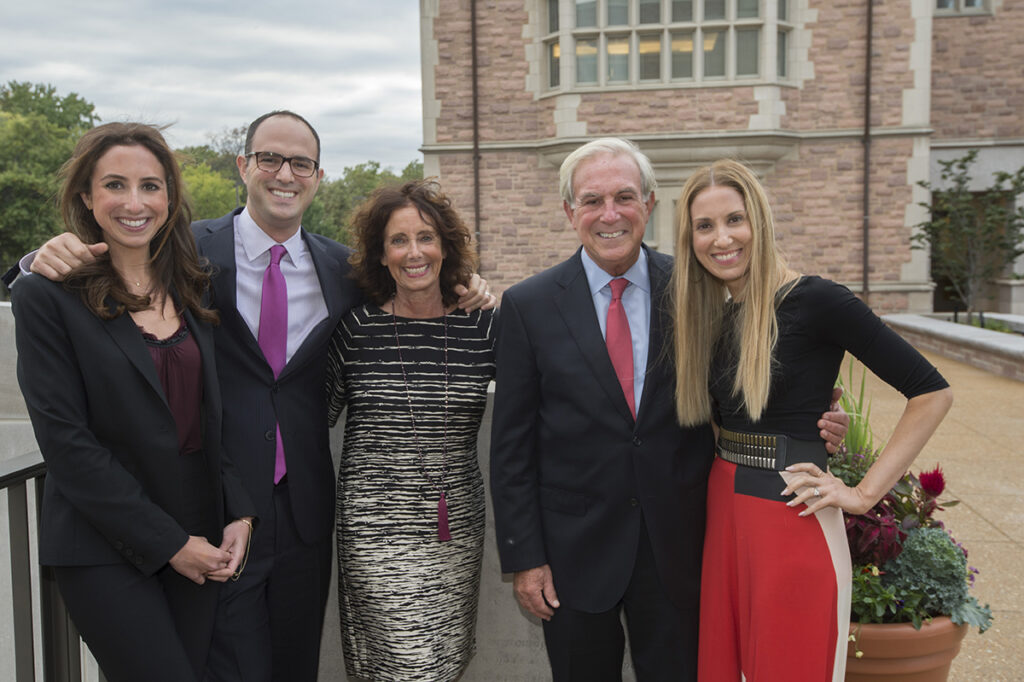
The Nussbaums quickly put down WashU roots. Sam served on the WashU Medicine faculty and taught in Olin Business School’s executive MBA program. Daughter Cara earned a bachelor’s degree from WashU in 2002. Sam and Rhoda, who was a lecturer in communication disorders at Fontbonne University, became close friends with Chancellor Emeritus Mark S. Wrighton and his wife, Risa Zwerling Wrighton. And when family friends visited St. Louis, Sam gave walking tours of the Danforth Campus to show off the beautiful architecture.
“He just loved WashU,” Barrie says. “And our family respected WashU as a pillar of the St. Louis community, so supporting the university was a no-brainer.”
Later, Sam became a nationally acclaimed executive at insurance company WellPoint/Anthem and a consultant for biomedical startups and international health agencies. But he and Rhoda maintained their WashU connection through their philanthropy and leadership.
Over the years, the couple made gifts to the Institute for Public Health and for scholarships across the university. In 2014, the Nussbaums committed $500,000 for new education and research facilities at the Brown School, and they made another $250,000 gift to the school in 2015. In recognition of their generosity, the outdoor space connecting Brown Hall and Goldfarb Hall with Hillman Hall is now known as the Sam and Rhoda Nussbaum Family Plaza. A classroom in Hillman Hall also bears their names. Sam served on the Brown School National Council from 2018 to 2021, and the school posthumously awarded him the Dean’s Medal in June 2022.
The unwanted challenge
A network of support formed around Sam when he began treatment at Siteman Cancer Center during the height of the COVID-19 pandemic. Barrie and Cara temporarily relocated from the East Coast with their young children to maximize time with their father. Friends delivered nightly dinners to the Nussbaums for months, leaving the food on their doorstep. The Wrightons also visited the family regularly.
Barrie Kahn Levine
“Our dad taught us that research is the cornerstone of medical breakthroughs. It’s critical to support this work, especially now. Philanthropy has never been more important.”
Sam continued working as much as he could. Meanwhile, he formed a strong partnership with Lim, who shared his latest research findings and helped him consider participation in clinical trials. Sam did not qualify for trials at Siteman but participated in one at Massachusetts General Hospital in Boston and another at Sarah Cannon Research Institute in Nashville, Tennessee.
Sam died from pancreatic cancer on Sept. 23, 2021, at age 73. “Dr. Nussbaum showed strength and grace right to the end,” Lim says. “He was a special man.”
“Interesting” is not enough
Sam was one of the roughly 320 patients treated for pancreatic cancer each year at Siteman, which is one of the nation’s top five centers for pancreatic cancer patient volume. For Lim, treating patients like Sam inspires and guides his research. “For some researchers, ‘interesting’ is enough,” Lim says. “But it’s not enough for me. I have to think about how my research will benefit the patients who have put their trust in me.”
Unfortunately, pancreatic cancer is among the most difficult cancers to treat, with five-year survival rates of around 11%. Lim is determined to push that number much higher. Championing the unconventional idea that pancreatic cancer is an inflammatory disease, he works to understand and address the mechanisms underlying its aggressive behavior and treatment resistance.
Bolstered by resources from the Nussbaum Fund, Lim and his team have made significant breakthroughs. They recently discovered that a protein called IRAK4 drives inflammation and prevents the immune system from attacking tumors. The team created a method to block IRAK4 and weaken tumor defenses. Their technique is now being tested in a national clinical trial under the National Cancer Institute’s Experimental Therapeutics Clinical Trials Network (ETCTN) led by Patrick Grierson, MD, PhD, an assistant professor of medicine at WashU Medicine and medical oncologist at Siteman. Lim says the early results are promising.
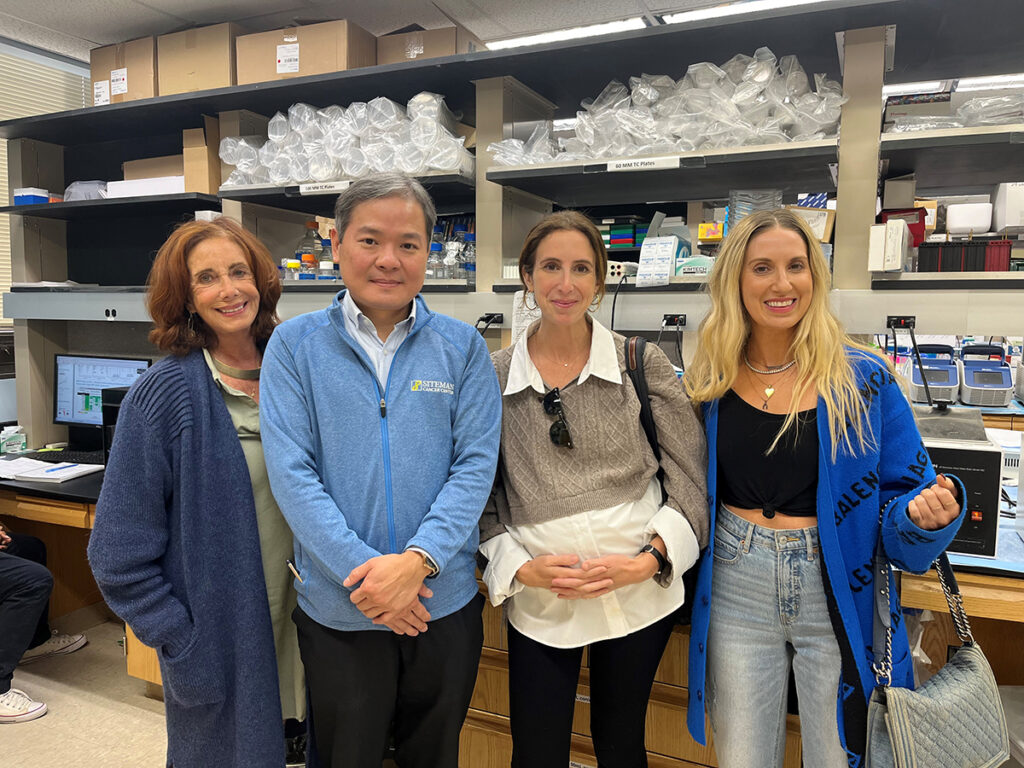
In related work, Lim has pinpointed how pancreatic tumors evade the first-line chemotherapy regimen known as FOLFIRINOX, a combination of drugs that attack pancreatic cancer cells in multiple ways. He is testing a blocking agent that could allow FOLFIRINOX to do its job better and is now evaluating the approach in a national clinical trial funded by a Specialized Program of Research Excellence (SPORE) grant from the NCI. WashU Medicine’s SPORE in pancreatic cancer is one of only three such programs in the country.
A third study involves the HER-2 receptor, a protein on the surface of cancer cells that is perhaps best known for promoting tumor growth in breast cancer. The Lim lab found that pancreatic tumors generate extra HER-2 as a protective mechanism against certain cancer treatments. He and his colleagues are exploiting that behavior by using HER-2 as a conduit to deliver chemotherapy directly to tumor cells. This clinical trial has also been approved by the NCI’s ETCTN and is currently under protocol development.
Lim believes WashU’s strength in cancer research is its ability to innovate. At the same time, the NIH favors research ideas that are well tested. Philanthropy fills the gap by supporting high-risk, high-reward science, he says. The SPORE grant is a prime example. When Lim first began seeing Sam as a patient, he was struggling to get research funding. “The Nussbaum Fund allowed us to gather the evidence we needed to compete successfully for the SPORE, which supports not only my HER-2 research but also two other major projects addressing pancreatic cancer,” Lim says. “The ultimate goal is to cure pancreatic cancer. I’m hopeful that we will increase survival significantly within the next decade or two.”
Finding solace
Seeing firsthand how philanthropy can push science toward a cure has been gratifying for Cara Kahn. “It feels like Dr. Lim is so close — like he’s on the cusp of something big,” she says. “He’s a hero in our eyes.”
The family’s philanthropic experience also helps them cope with their loss. “It gives you a level of control over something that feels so out of control,” says Barrie, who hopes their story will inspire others to give. “Our dad taught us that research is the cornerstone of medical breakthroughs. It’s critical to support this work, especially now. Philanthropy has never been more important.”