Roma Broida Wittcoff, BSBA ’45, attended WashU during extraordinary times. To address the social challenges of World War II, the university began granting bachelor’s degrees in social work to undergraduates like her. Previously, the field of study had only been open to graduate students.
“I entered when the U.S. joined the war in 1941, and I graduated when the war ended in 1945,” Wittcoff recalls. “There were so many problems, including soldiers who came back too injured to work and husbands who perished and left young families with no means of support.” After graduating, she took a job with the American Red Cross. Disillusioned by bureaucracy within the organization, she eventually left the field altogether.
However, Wittcoff would go on to make a powerful social impact through advocacy for St. Louis-area arts, civic, and educational institutions, including WashU. Now, she is extending her legacy at the university by investing $1 million to launch the Wittcoff Accelerator Challenge for Brown School Endowed Practicum Scholarships. The challenge helps donors reach $250,000 — the minimum to establish a new named practicum award for Master of Social Work students — by providing up to $200,000 in matching funds to gifts of $50,000 or more.
Wittcoff’s support bolsters the university’s broader efforts to increase educational access and build future-ready leaders through With You: The WashU Campaign. “My hope is that, by reducing financial burdens, outstanding young people can follow their heart’s desire to become social workers without incurring impossible tuition costs,” she says.
An ambitious vision for access and affordability
Like an internship, practicums immerse students in social work organizations and enable them to hone their skills through real-world application. Although a requirement for most master’s degree programs in social work, practicums are largely unpaid and come with related costs. This often forces students, many with preexisting educational debt, to choose between earning an income and working toward their degree.
In fall 2024, nearly 28% of incoming Brown School students owed a median of $24,000 in undergraduate debt. And the profession’s low starting salaries — just $57,500 for Brown School graduates in 2024 — only exacerbate the problem.
Covering the cost of fieldwork education is vital to addressing these financial strains, according to Dorian Traube, the Neidorff Family and Centene Corporation Dean of the Brown School. The Brown School is the first U.S. school of social work to offer financial support for required practicum credits, which includes tuition coverage and a living stipend. Dean Traube would like to see the school go even further by becoming tuition-free.
“Educating social workers isn’t just about individual careers,” Traube says. “It’s about transforming entire communities. When exceptional students aren’t priced out of a top-tier education, there’s no cap on what they can achieve. Making that level of access possible takes a shared commitment, and the Wittcoff Accelerator Challenge gives us the engine to do it.”
By helping reduce the overall cost of social work education, the challenge opens doors to talented and motivated students regardless of their ability to pay. Additionally, it empowers students to select their future specialties based on passion rather than financial compensation. For some, this means advocating for children in foster care; for others, counseling clients with substance use disorders or conducting policy research.
“I have a great regard for the roles that social workers play,” Wittcoff says. “I admire their compassion, innovation, and pursuit of equity and justice.”
Extending a long-standing legacy
Wittcoff’s challenge gift is the latest example of her leadership and support for WashU. Over the years, she has served on the university’s Board of Trustees, WashU Medicine National Council, Brown School National Council, and Alumni Board of Governors. In 1982, she established the Daniel Broida Memorial Scholarship in the McKelvey School of Engineering in memory of her first husband, a WashU alumnus who founded Sigma Chemical Co., now part of MilleporeSigma.
Wittcoff’s WashU legacy deepened significantly after she married her second husband, the late Raymond Wittcoff, a public television pioneer and urban developer who helped create today’s St. Louis skyline. Together, the Wittcoffs made generous gifts across WashU, from facilities to scholarships and professorships like the Roma B. & Raymond H. Wittcoff Distinguished Professorship in McKelvey Engineering.
In recognition of their service and philanthropy, the couple was honored with WashU’s Robert S. Brookings Award in 1993 and WashU Medicine’s Second Century Award in 1995. That same year, the Brown School awarded its Dean’s Medal to Roma.
Family participates in giving challenge
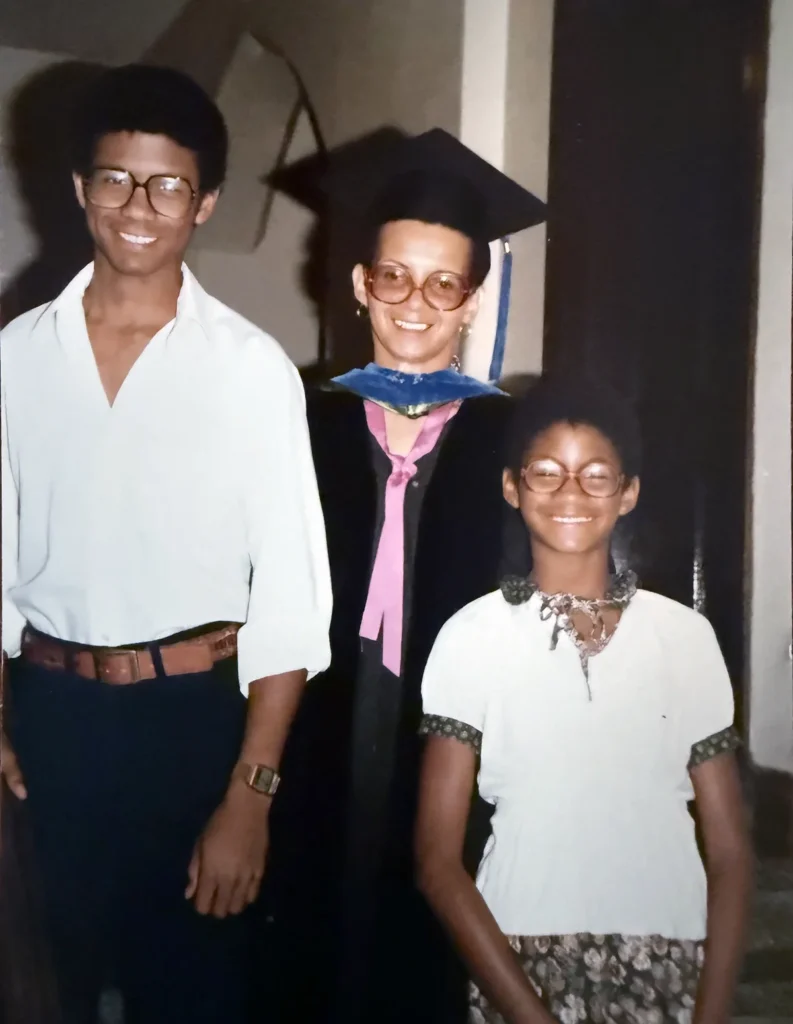
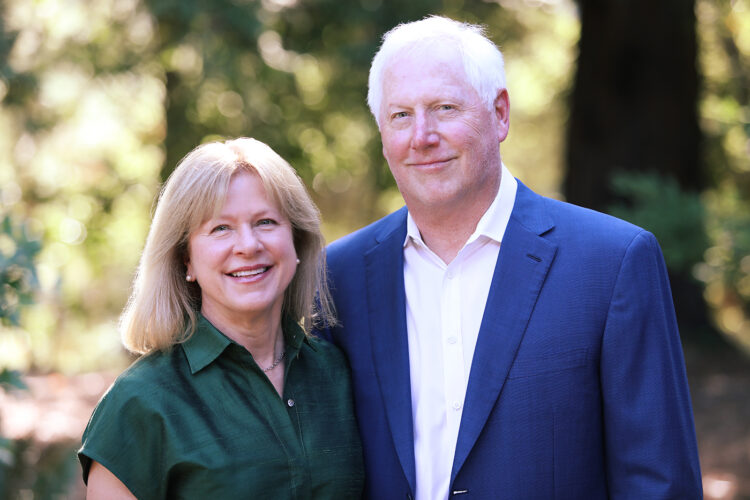
The Van Buren family was able to leverage funds provided by the Wittcoff Accelerator Challenge to establish a new endowed practicum scholarship for social work students.
Beyond her alma mater, Wittcoff has played an integral role in the civic and cultural affairs of the St. Louis region, including helping form Opera Theatre of St. Louis and serving as a board member of local affiliate Nine PBS. In 2020, she was inducted into the Opera Hall of Fame.
By creating a new challenge to support experiential learning at the Brown School, Wittcoff is helping make careers in social work a reality for the next generation. And she is eager to enlist other donors who share her commitment. “I urge you to join the effort,” she says. “The Brown School is a fabulous place, and it’s doing wonderful things. Why not support the best?”